Decipherments A
Unlike LinB inscriptions, which are primarily found in tablet form, LinA inscriptions are found on a variety of materials. However, a majority of inscriptions are so fragmented that complete decipherment is not possible. Consequently, these LinA decipherments are limited to whole, unambiguous inscriptions. Ideally, every decipherment should be accompanied by clear image(s); when available, these will be included in due time. As evidence dictates, decipherments may be subjected to either correction or deletion. Despite expected inconsistencies, it is always hoped that the greater picture will prevail.
Notes:
- More decipherments may be found under Toponyms in Linear A (線文字A, Γραμμικη Α) Texts.
- For an understanding of method, see The Phonetic Method in Linear A Decipherment.
- Asterisks * are used as word separators.
- Brackets <> around numeric designations indicate missing inscriptions.
Classification of LinA Inscriptions:
- Wa = nodule
- Wb = sealing
- Wc = roundel (disc)
- Za = stone vessel
- Zb = clay vessel
- Zc = inked inscription
- Zd = graffito
- Ze = architecture: These inscriptions are also called monumental and palatial. “Mason’s marks” are included in this class.
- Zf = metal object
- Zg = stone object [other than a vessel]
Reference:
- Hallager, Erik. 1996. The Minoan Roundel and Other Sealed Documents in the Neopalatial Linear A Administration. Vol. 1 & 2. Université de Liège. [This may be a frequent source for images of roundels.]
Categorical Index | Numerical Index |
Noduli | Roundels |
CATEGORICAL INDEX
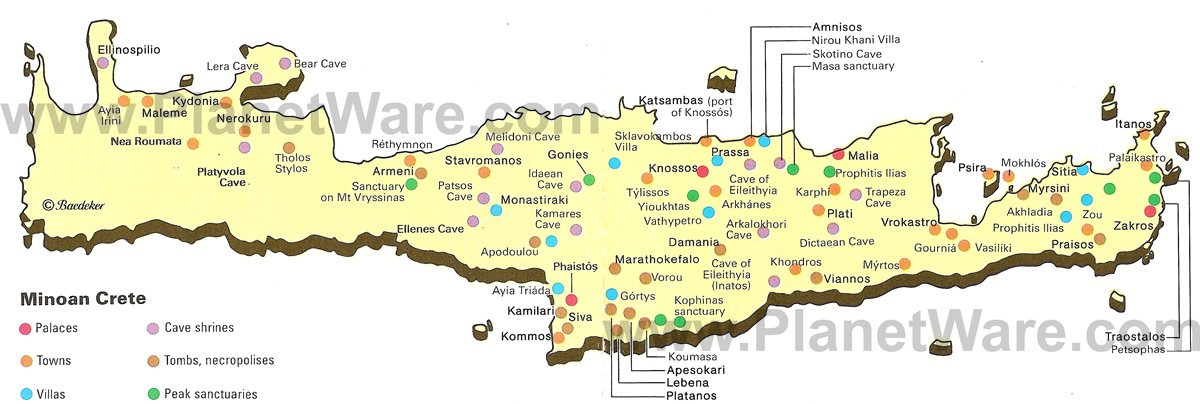
As of 03.24.15, there are 53 sites in which LinA inscriptions have been found.
Apodoulo (AP)
Argos (ARG)
Arkalokhori (AR)
Arkhanes (ARK)
Armenoi (ARM)
Crete (CR)
Gournia (GO)
Hagios Stephanos (HS) is the site of an ancient temple, which is located at the eastern end of Crete on the Lasithi Plateau, between Gournia and Zakros. The Greek ἅγιος (hagios) means “devoted to the gods; holy, sacred”.
- HS Zg 1 > a schist plaque
Haghia Triada (HT) “holy trinity” is the site of an ancient villa, which is located in southern Crete on the northwestern end of a coastal ridge above the Mesara Plain; Phaistos is situated on the southeastern end of the ridge. Haghia Triada has yielded more LinA tablets than any other site. The Greek ἁγία (hagia) is the feminine form of ἅγιος (hagios) and means “devoted to the gods; holy, sacred”.
- HT 117 > a trade itinerary
- HT Wa 1014-18, 1027-28 > noduli
Iouktas (IO)
Kamilari (KAM)
Kannia (KAN)
Kardamoutsa (KA)
Kea (KE) or Keos (modern Tzia) is a Cycladic island located 60 km (37.5 miles) southeast of Athens. During the Bronze Age, Kea was a Minoan settlement at the site now known as Aghia Irini.
- KE Zb 3 > a course-ware cup
Khania (KH) Presumed LM IB context.
Knossos (KN)
Kophinas (KO)
Kythera (KY)
Malia (MA) is the site of a major Minoan palace in north-central Crete. The palace was destroyed by an earthquake in the late bronze age. The town ruins lie approximately three km. east of the palace site.
Larani (LA)
Melos (MI)
Miletos (MIL)
Mokhlos (MO)
Mycenae (MY) was a fortified city (citadel) that was located on the Argolid Plain about 56 miles (90 km) southwest of Athens. The Mycenaeans were so influential that the period in Greek history between 1600 and 1100 BCE is called the Mycenaean age; the Mycenaeans were believed to have flourished around 1350 BCE. While Mycenae is known for its LinB tablets, at least two LinA inscriptions have been found on grave goods.
- MY Zf 2 > a bronze cauldron
Nerokourou (NE)
Palaikastro (PK)
Papoura (PA)
Petras (PE)
Petsophas (PET)
Phaistos (PH)
Platanos (PL)
Poros Herakleiou (PO)
Prassa (PR)
Pseira (PSI)
Psykhro (PS)
Pyrgos (PYR)
Samothrace (SAM)
Selakanos (SE)
Skhinia (SK)
Sitia (SI)
Skoteino Cave (SKO)
Syme (SY)
Tel Haror, Israel (TEL)
Thera (THE)
- THE ZB 6 > an earthenware jug
Tiryns (TI)
Traostolos (TRA)
Troullos (TL)
Troy (TRO)
Trypiti (TRY)
Tylissos (TY)
Vrysinas (VRY)
Zakros (ZA)
NUMERICAL INDEX
Haghia Triada (HT)
- HT 117 > a trade itinerary
- HT Wa 1014-18, 1027-28 > noduli
Hagios Stephanos (HS)
- HS Zg 1 > a schist plaque
Malia (MA)
- MA Wc <5> > an inventory marker
- MA Ze 11 > a monumental inscription
Thera (THE)
- THE ZB 6 > an earthenware jug
Haghia Triada (HT)
Phaistos (PH)
Malia (MA)
- MA Wc <5> > an inventory marker
Phaistos (PH)
- PH Wc 39 > a roundel with a triton seal
 Konosos
Angelos Ramirez
Don’t let the man above discourage your work. There is no reason to assume it is impossible for Linear A and Japanese to be connected. Analysis of Japanese Shinto myth related VERY closely resembles Greek myth.
Furthermore, there’s preposed connections between the names of old Japanese clans that relate to Anatolian-Hittite names.
Why would it be deemed impossible for there to be a common ancestor between these two groups? We know the Tocharians existed, so what’s the impossibility of there being a proto-Anatolian clan that went East and eventually influenced the development of a Central Asian peoples that later became the Puyo-Goguryeo complex that founded Yamato Japan?